Why Most Software Projects Fail Before the First Line of Code
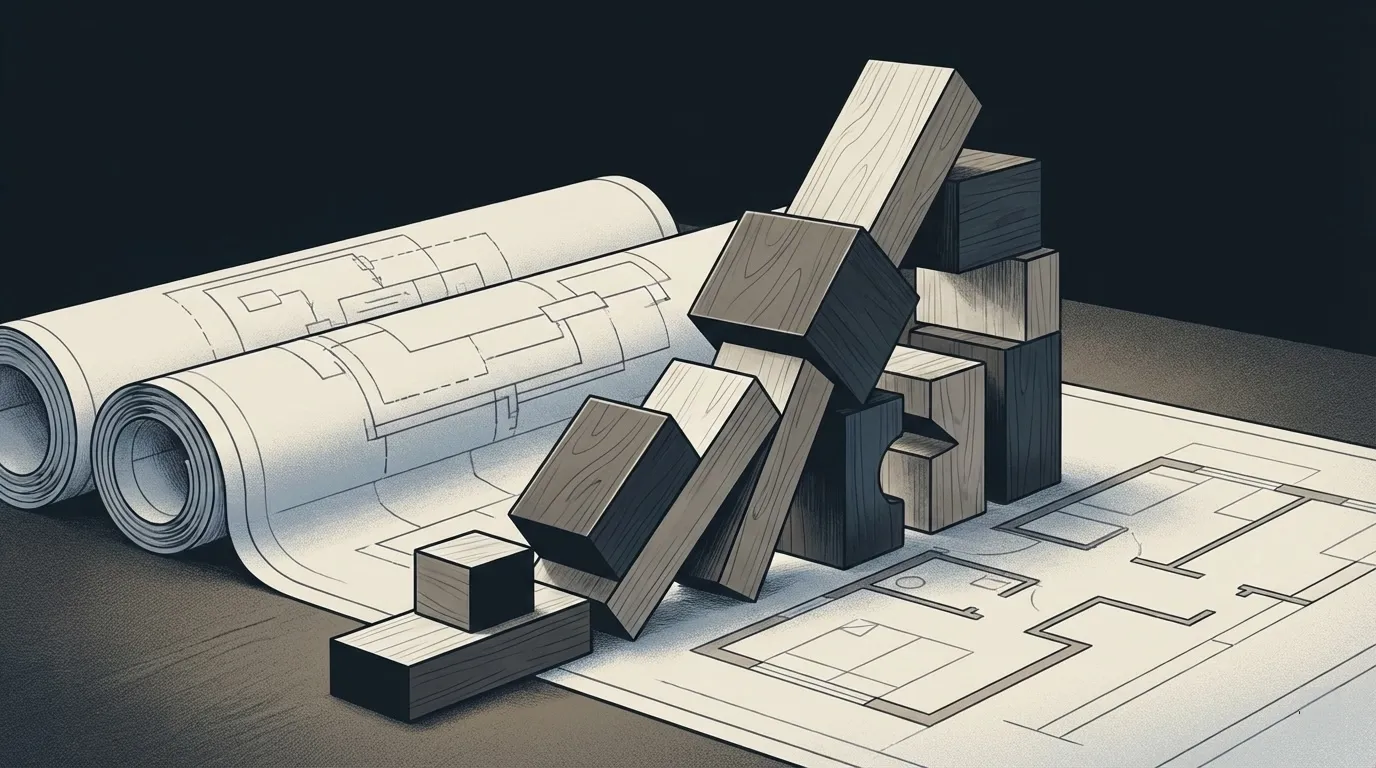
I've watched dozens of projects collapse over the years, and there's a pattern you start to notice.
When things go wrong, everyone points to the obvious stuff: the code was messy, the deadline was impossible, the developer wasn't experienced enough.
But they're rarely the real reason.
The real reason usually happened weeks or months earlier, in a conversation that felt unimportant at the time.
The Decisions That Actually Break Projects
Here's what I've learned: most software failures aren't technical failures. They're thinking failures.
The projects that crash and burn usually skipped over some fundamental questions:
What problem are we actually solving? Not the feature we want to build—the actual problem it solves.
Who's responsible when things go wrong? Because if everyone's responsible, no one is.
What does "done" really mean? Vague goals create vague results.
What absolutely cannot break? Every system has critical paths. Know yours before you build.
These questions feel abstract. They don't feel like "real work" the way coding does. So teams rush through them or skip them entirely.
That's the mistake.
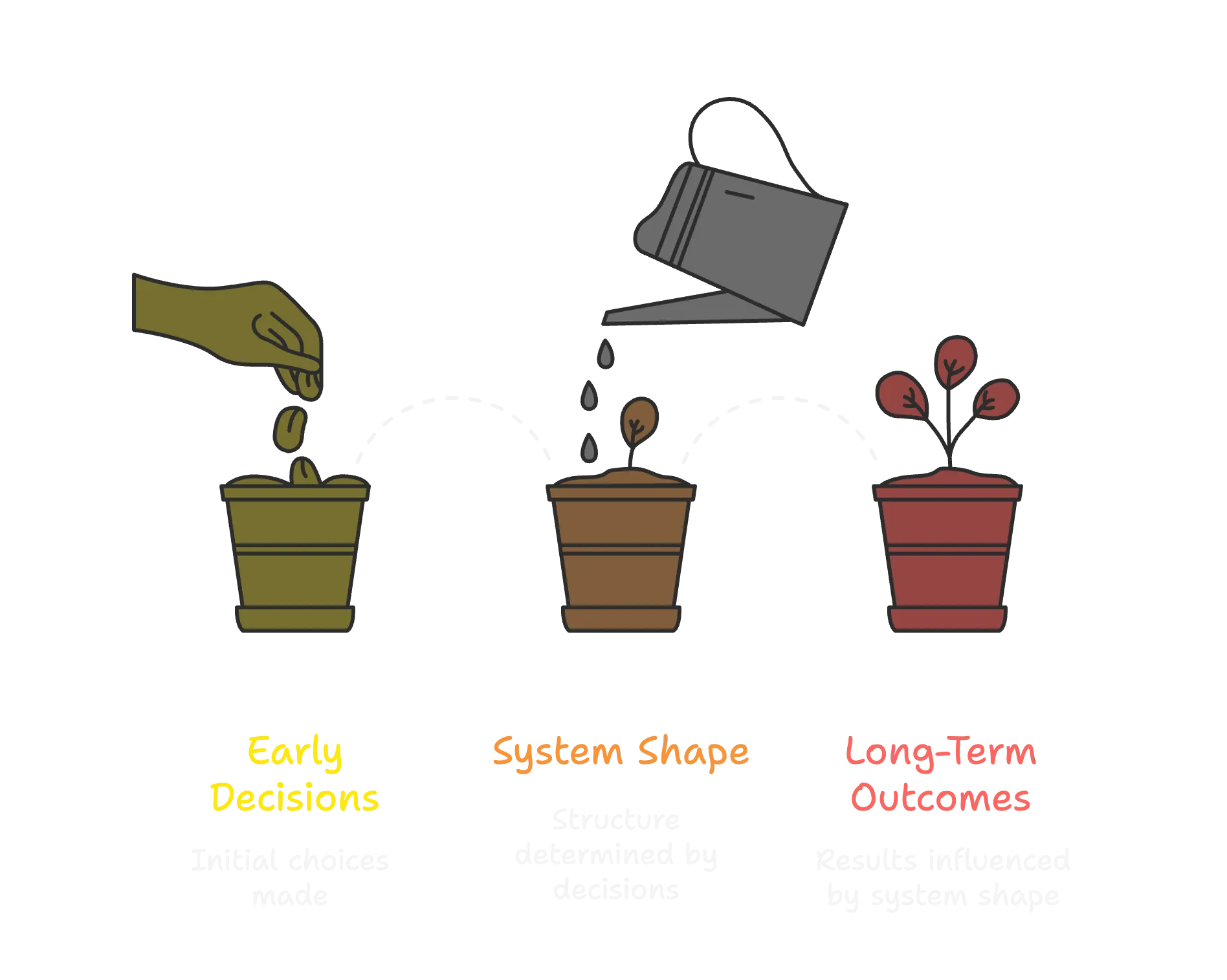
Once you build on a shaky foundation, no amount of good code can fix it. You're just building the wrong thing really well.
Why "Keeping It Flexible" Often Backfires
I get it. Nobody wants to over-engineer things. We've all seen projects that spent six months planning and never shipped.
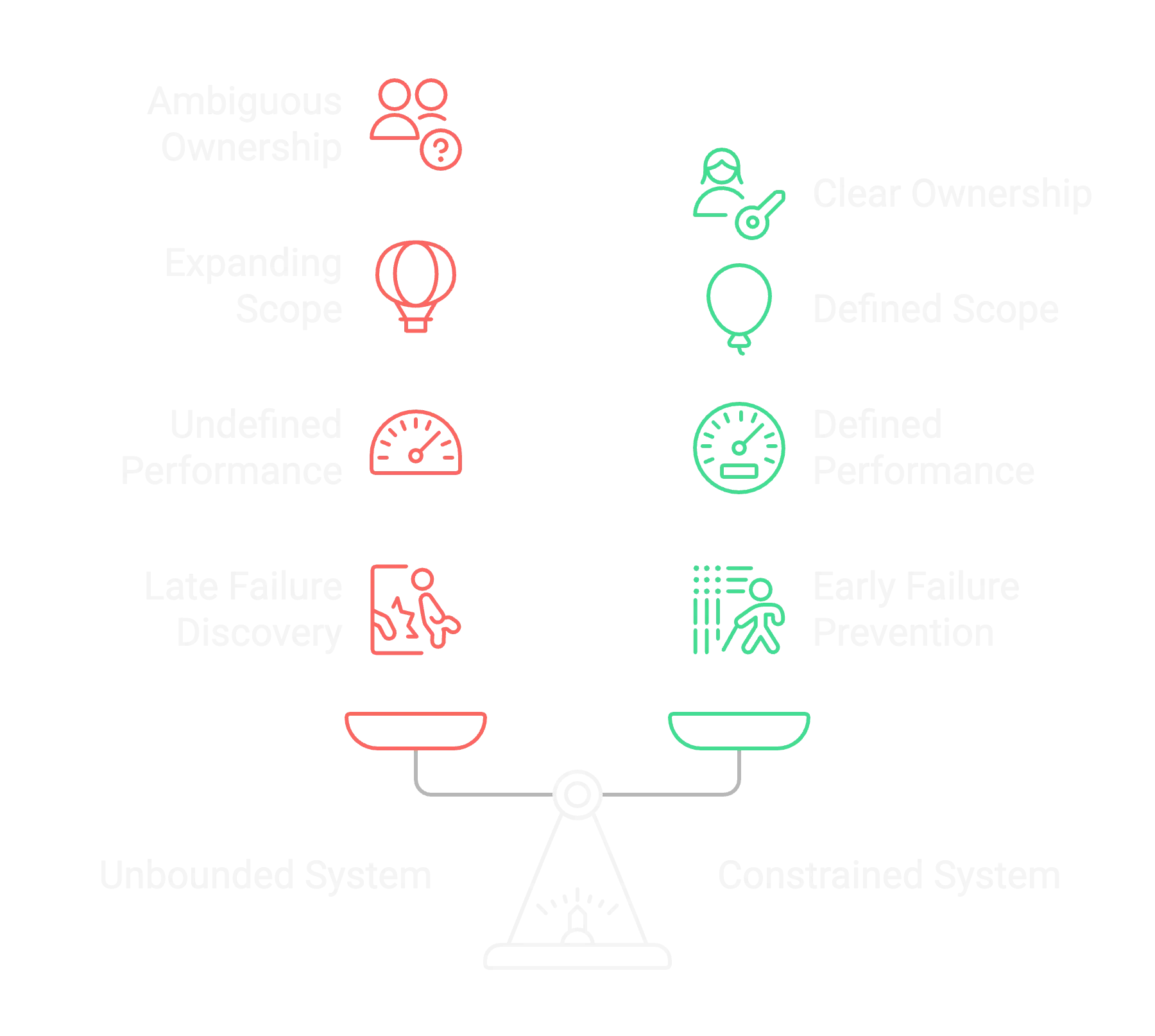
But here's the thing: flexibility without constraints isn't freedom. It's chaos waiting to happen.
When you start a project saying "we'll figure it out as we go," you're making a bet. You're betting that you'll naturally converge on the right decisions as you build.
Sometimes that works. Often, it doesn't.
Without clear constraints from the start:
- Ownership gets murky (who decides what happens when two features conflict?)
- Scope creeps in quietly (just one more thing, it'll be quick)
- Performance becomes an afterthought (we'll optimize later)
Constraints aren't limitations. They're guardrails. They let you move fast because you know where the edges are.
A system without constraints doesn't stay nimble. It just accumulates complexity until someone has to untangle it all.
The Difference Between Building Features and Building Systems
This is where a lot of teams lose their way, and it's subtle.
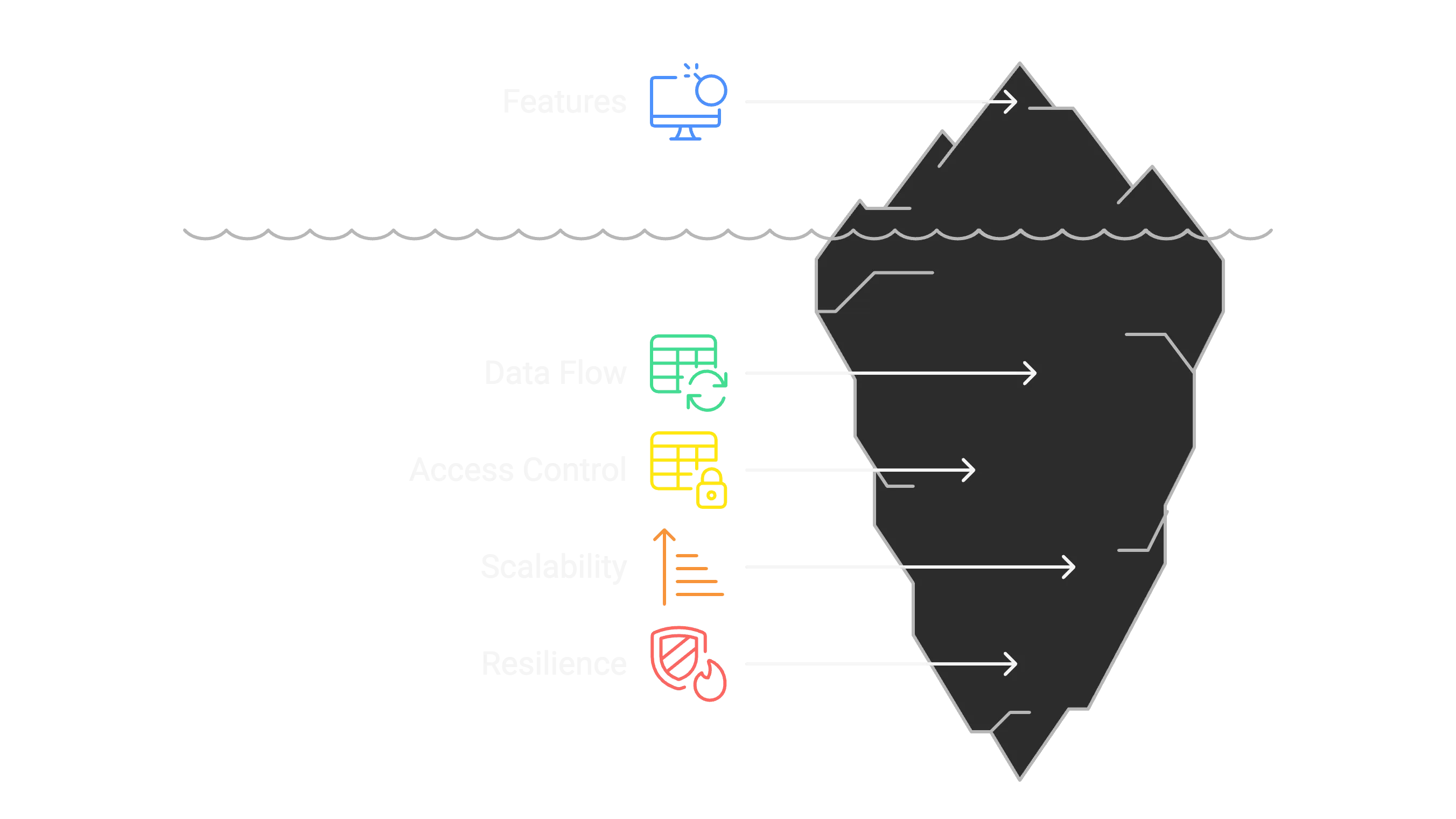
Feature thinking sounds like this:
- What pages do we need?
- Where should this button go?
- Can we ship this by Friday?
System thinking sounds like this:
- How does data flow through this?
- Who can access what, and why?
- What happens when we get 10x the traffic?
- When this breaks, what breaks first?
Features are sexy. They're visible. They're what you demo to stakeholders.
Systems are invisible. They're the boring stuff that determines whether your app works at 3am when something unexpected happens.
Here's the pattern I see constantly:
Projects that focus on features feel productive early. There's momentum, there's visible progress, stakeholders are happy.
Then, six months in, everything gets harder. Simple changes take weeks. Everything's connected to everything else. The codebase feels fragile.
Projects that invest in system thinking feel slow at first. There's lots of discussion, lots of "why are we talking about this instead of building?"
But six months in, they're cruising. Changes are predictable. The team knows how things work. There's a shared mental model.
That's not a coincidence. That's the tradeoff.
The "We'll Fix It Later" Trap
Every single team I've worked with has said some version of this:
"Yeah, this isn't ideal, but we'll refactor it later."
Want to know a secret? Later almost never comes.
It's not because developers are lazy or short-sighted. It's because the world keeps moving:
- New deadlines appear
- Business priorities shift
- The "temporary" solution becomes load-bearing
- The person who wrote it leaves
- New features get prioritized over cleanup
Before you know it, that quick hack you did in week two is a fundamental assumption in week fifty-two.
It's not technical debt anymore. It's organizational debt.
The codebase has calcified around decisions you never really made consciously. And now changing them requires changing everything.
"Later" isn't a phase of development. It's a wish. And wishes don't ship.
What Actually Needs to Happen Before You Code
I'm not suggesting you write a 200-page specification document. That's not the point.
The point is doing a specific kind of thinking early, when it's cheap and easy to change your mind.
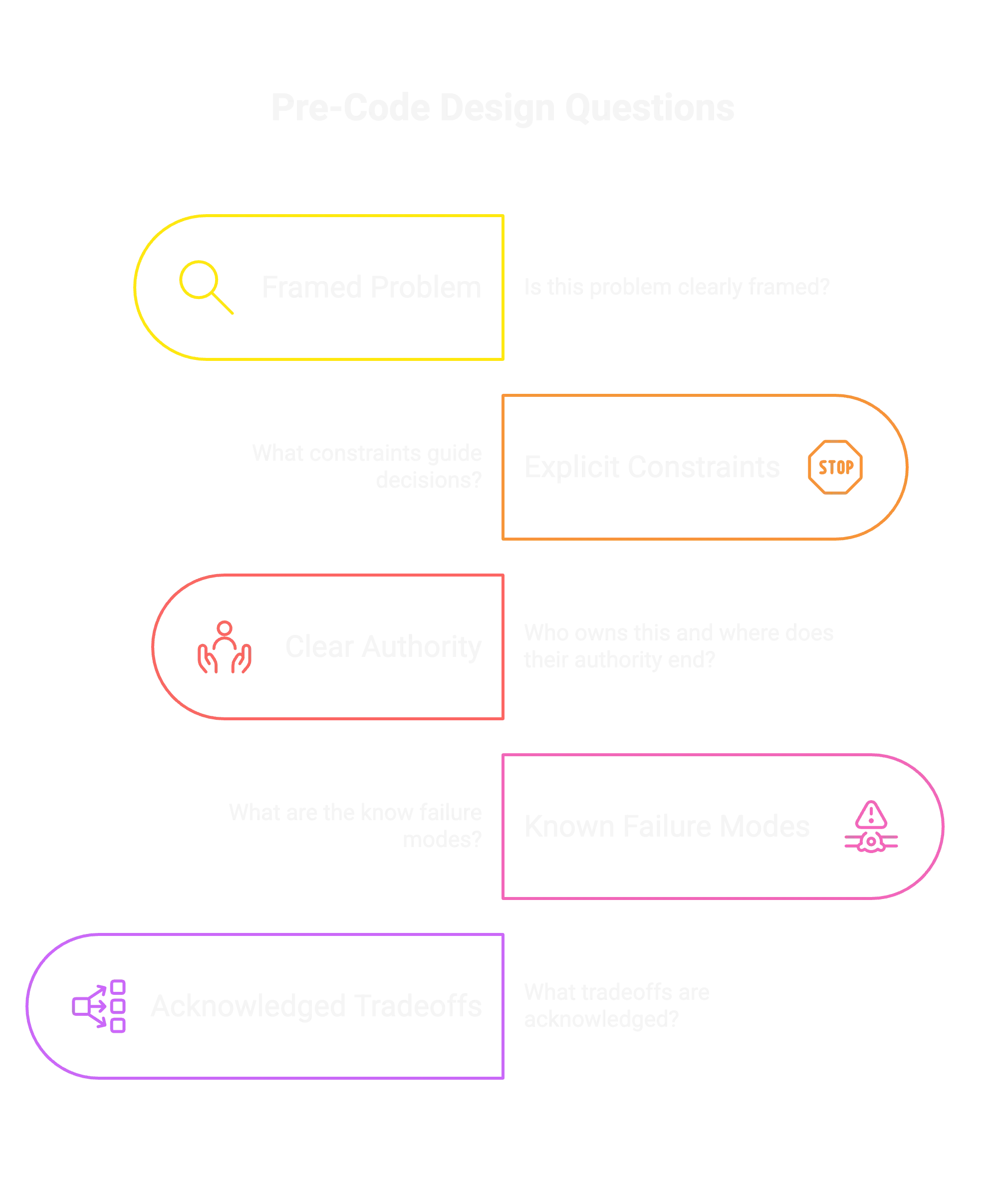
Before you write code, you need:
A real problem statement. Not "build a dashboard" but "sales reps waste 2 hours/day manually compiling reports." Concrete. Specific. Measurable.
Explicit constraints. What are the rules? What can't we do? What must we preserve? These guide every decision that follows.
Clear ownership. Who owns this decision? Who's accountable for that outcome? Ambiguity here creates political gridlock later.
Known failure modes. Where will this break? What happens when it does? Better to think about it now than discover it at 2am.
Acknowledged tradeoffs. Every decision closes off options. Be honest about what you're giving up.
Notice what's not on that list: tech stack, frameworks, cloud providers, specific tools.
Those matter, but they come later. They're how you build, not what you build.
You can't technology your way out of unclear thinking.
What Changes When You Get This Right
Doing this work upfront doesn't prevent all problems. Software is messy. Reality is unpredictable.
But it changes the nature of the problems you face.
Teams that invest in this early phase tend to have:
- Fewer "pivots" that are really just rewrites in disguise
- Fewer architectural surprises six months in
- Clearer, faster decisions (because the framework exists)
- Less tension between engineering and business (shared understanding)
The system still evolves. Requirements still change. That's fine.
The difference is that evolution is intentional, not reactive.
You're not scrambling to figure out what you're building. You're refining how you build it.
Good systems don't prevent failure. They fail in predictable ways that you've already planned for.
The Part Nobody Talks About
If your project feels chaotic three months in, that's not bad luck.
It's under-design at the start.
I don't mean every detail needs to be planned. I mean the shape of the system needs to be understood before you start building it.
Think of it like building a house. You don't need to pick paint colors before you pour the foundation. But you do need to know where the walls go.
Most teams rush through this phase because it feels slow. It feels like you're not making progress.
But here's the reality: thinking is cheaper than building, and building is cheaper than rebuilding.
The hour you spend wrestling with these questions now saves you the week you'd spend untangling the mess later.
Where We Come In
At our company, we're a bit obsessive about this phase. While other teams are rushing to start coding, we're still asking uncomfortable questions.
Why? Because we've seen what happens when you skip this work.
We've inherited the projects where "temporary" became permanent. We've debugged the systems where nobody could explain why things were built a certain way. We've watched teams burn out trying to retrofit clarity into chaos.
So we do it differently.
We spend more time upfront understanding the problem, defining the constraints, mapping the system. Not because we love meetings or documentation, but because we've learned it's the cheapest time to think.
It feels slower at first. But it's actually faster in the only timeline that matters: from idea to working system that people actually use.
Because shipping fast doesn't matter if you're shipping the wrong thing.
We’ve learned, sometimes the hard way, that the cheapest time to think is before anything is built. The work feels slower at first, but it compounds in ways most teams only appreciate later.
If you’re early in a project and asking some of these questions, you’re probably on the right track.