Authorization Is Business Logic, Not a UI Feature

Authorization is one of those things everyone thinks they understand.
Until it breaks.
Most teams treat authorization as a UI concern:
- Hide this button
- Disable that screen
- Show this option only for admins
It works just long enough to create confidence.
And then reality arrives.
Because authorization is not about screens.
It’s about authority.
And authority is business logic whether you acknowledge it or not.
The Common Mistake: Treating Authorization as Presentation Logic
In many systems, authorization decisions live in the wrong place:
- In the frontend
- In route guards
- In conditional rendering
- In role-based UI toggles
The mental model looks like this:
If the user can’t see it, they can’t do it.
That model fails the moment:
- APIs are reused
- Roles overlap
- Money enters the system
- Or someone finds an endpoint you forgot to protect
UI is about experience.
Authorization is about permission.
They are not the same thing.
Authentication vs Authorization (Briefly, Because This Isn’t a Tutorial)
Authentication answers:
Who are you?
Authorization answers:
What are you allowed to do?
Most systems get authentication mostly right.
Most systems get authorization dangerously wrong.
Why? Because authentication feels technical.
Authorization feels political.
It forces uncomfortable questions:
- Who is allowed to change this?
- Who owns this data?
- Who is responsible if this goes wrong?
Those aren’t framework questions.
They’re business questions.
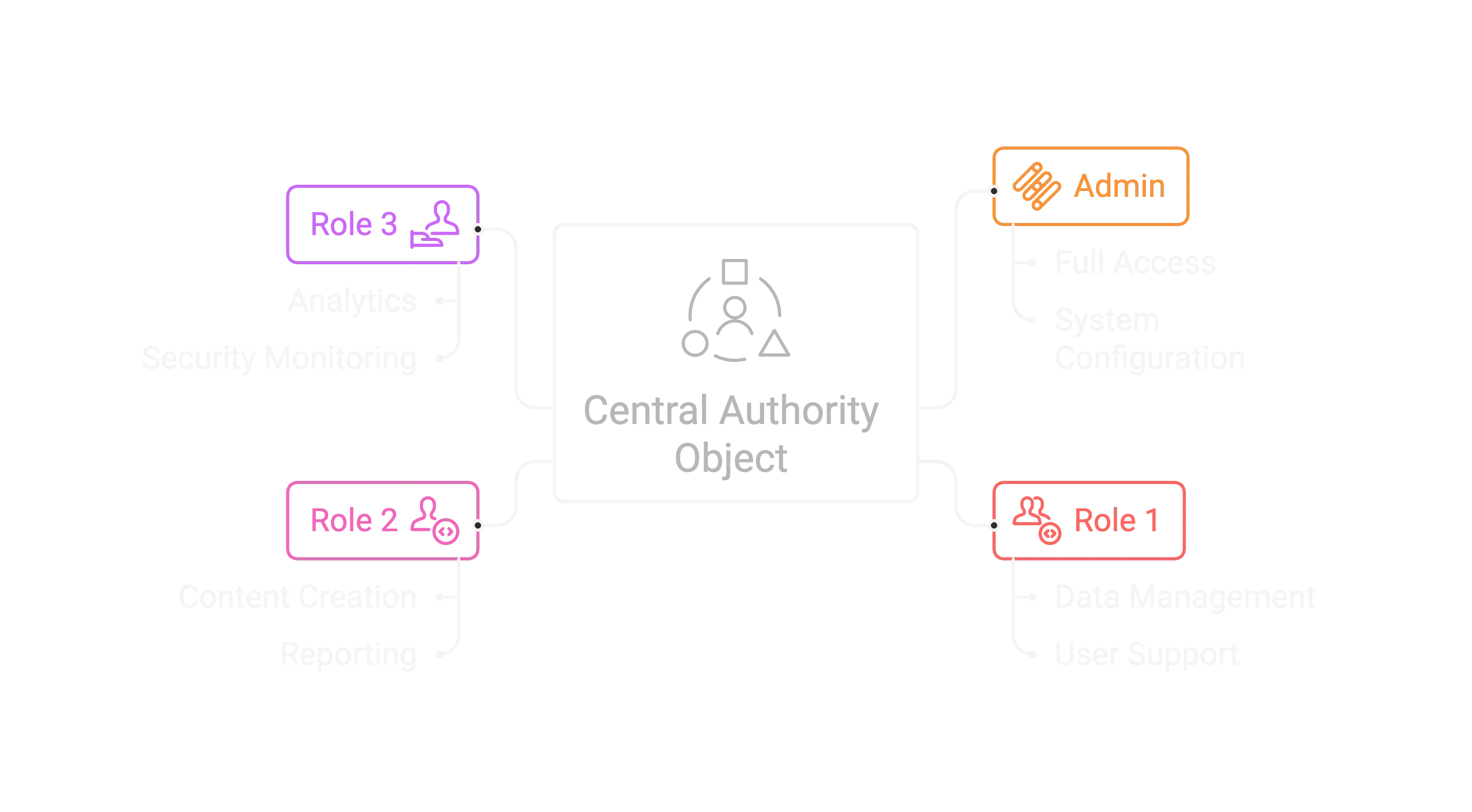
Real Systems Don’t Have Symmetric Users
Authorization problems usually show up when real-world asymmetry enters the picture.
Consider a tutoring platform:
- Parents pay
- Students attend
- Teachers deliver
- Admins oversee
These roles are related, but not hierarchical.
A parent should:
- Control subscriptions
- View progress
- Never attend sessions
A student should:
- Attend sessions
- Never manage billing
A teacher should:
- Deliver instruction
- Never see payment details
Trying to flatten this into “user roles” attached to UI screens is how permission leaks happen.
Where Systems Break When Authorization Is Modeled Wrong
When authorization is treated as an afterthought, failures show up in predictable ways:
- Users gain access through API paths the UI didn’t anticipate
- Billing actions become loosely protected “admin features”
- Permissions are duplicated across frontend and backend
- Fixes become patches instead of corrections
The worst part is that these failures are often silent.
They don’t crash the system.
They quietly violate trust.
Security issues, billing mistakes, and data leaks are rarely caused by missing features.
They’re caused by incorrect authority models.
Authorization Is About Boundaries, Not Roles
Roles are convenient labels.
Boundaries are the real work.
Good authorization design asks:
- What object is this action acting on?
- Who owns that object?
- Who is allowed to mutate it?
- Under what conditions?
This often leads to designs where:
- Permissions are tied to resources, not users
- Authority flows through ownership, not role names
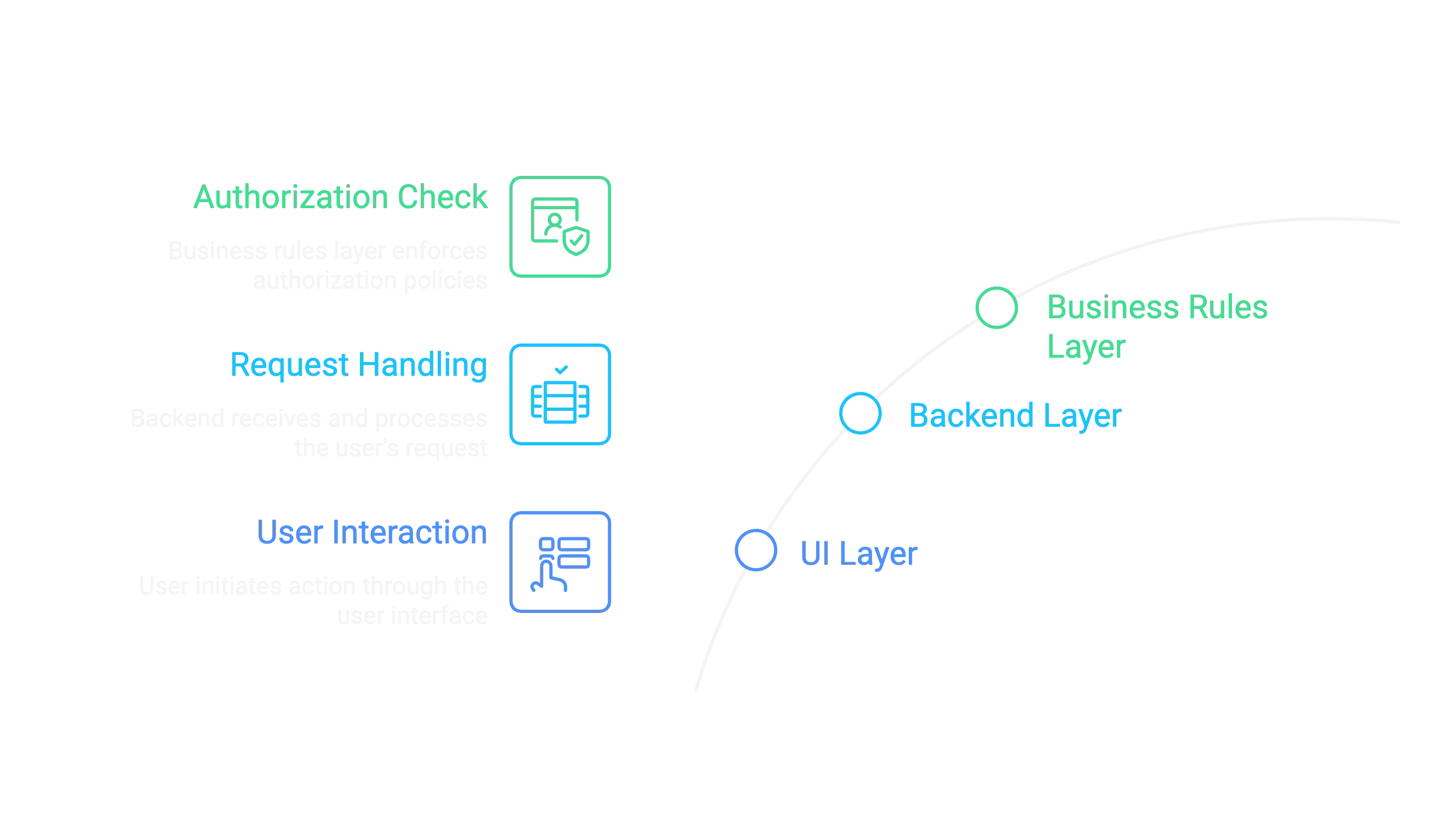
- Business rules live in the backend, not the UI
This feels slower at first.
It’s dramatically cheaper later.
Designing Authorization Early Changes Everything
When authorization is designed early:
- APIs become clearer
- UI logic becomes simpler
- Security becomes systemic instead of reactive
- Business rules stop leaking into presentation layers
More importantly, teams stop arguing about implementation and start agreeing on intent.
That shift alone saves months.
The Pattern Behind Most Authorization Bugs
If authorization feels messy halfway through a project, it usually wasn’t unlucky.
It was under-designed.
Teams rushed past the hard questions because:
- Deadlines loomed
- Requirements felt “obvious”
- The UI looked simple enough
By the time problems surfaced, the system had already encoded the wrong assumptions.
Fixing authorization late is expensive because it means changing meaning, not just code.
The Quiet Conclusion
Authorization is not a security feature you bolt on later.
It’s a representation of how your business actually works.
If it lives in the UI, it will drift.
If it lives in the system, it will hold.
At Appskill, we treat authorization as part of system design, not a checkbox at the end of development.
Because once authority is wrong, everything built on top of it is standing on borrowed ground.